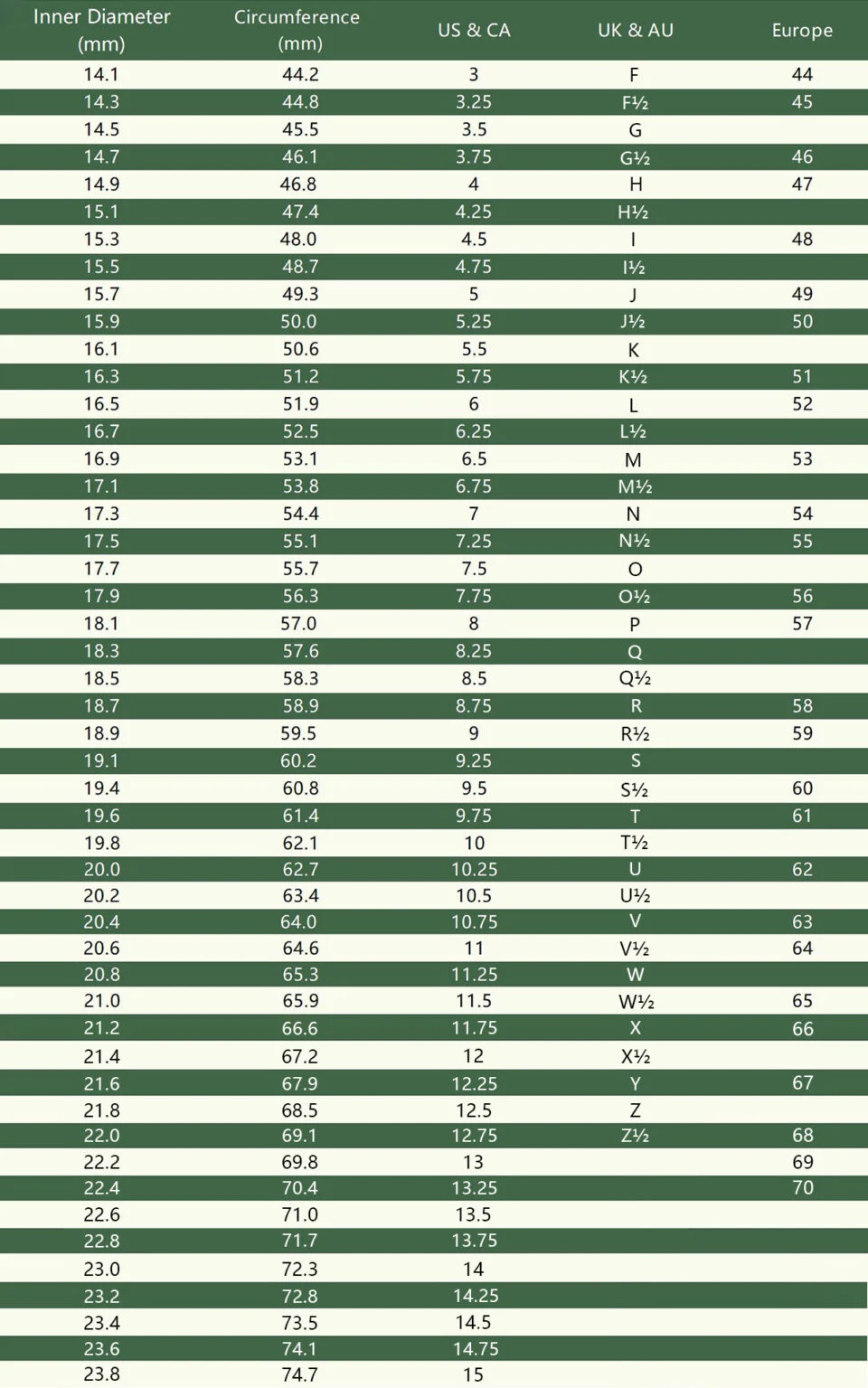
1. Getting Started:
Shopping for a ring online gives you endless options — but we know that finding the right size can feel uncertain when you can’t try it on in person. At AR FineJewelry, we want your experience to be effortless and worry-free, which is why we’ve created this simple guide to help you determine your ideal size with confidence.
Since each ring is handcrafted to order, accuracy is key. Please take a few moments to review this guide carefully before placing your order. Rings that require resizing or exchange are subject to a 35% restocking fee, as each piece is made exclusively for you.
Whether you’re planning a proposal, celebrating a milestone, or treating yourself, we want your ring to fit perfectly from the start. Let’s walk you through the steps to find your perfect fit.
2. Key Points to Know About Ring Sizes:
1) Different Bandwidth Affects the Wearing Experience
Common Bandwidth We Use:
We usually use a 1.4–2mm bandwidth for women’s rings, which are considered narrow bands. (Check the specific bandwidth in the product description.)Narrow Bands May Feel Larger:
Narrower rings apply less pressure on the finger, so they may feel slightly looser than expected.Wider Bands and Enhancer Bands May Feel Snugger:
Rings with wider bands (over 2mm) or enhancer bands (ring guards or jackets) tend to feel tighter because they cover a larger area of the finger.
→ In such cases, consider choosing ¼ or ½ size larger for comfort.Adjusting for a Perfect Fit:
Please note how bandwidth affects fit before purchasing to ensure the best comfort and accuracy.
2) Resizing Considerations
Resizing Limitations:
Not all rings can be resized easily.
Rings with intricate designs or eternity styles (stones all around) may have limited resizing options.Potential Risks of Resizing:
Resizing can weaken a ring’s structure if adjusted too much.
For rings with side stones, resizing may loosen settings, risking stone loss.
Alternatives to Resizing:
If resizing isn’t possible, there are helpful alternatives:Sizing beads
Ring guards
Exchanging the ring for a better fit (if applicable)
3. How To Determine Ring Size?
1) Measure an Existing Ring
If you have a ring that fits perfectly but don’t know its size:
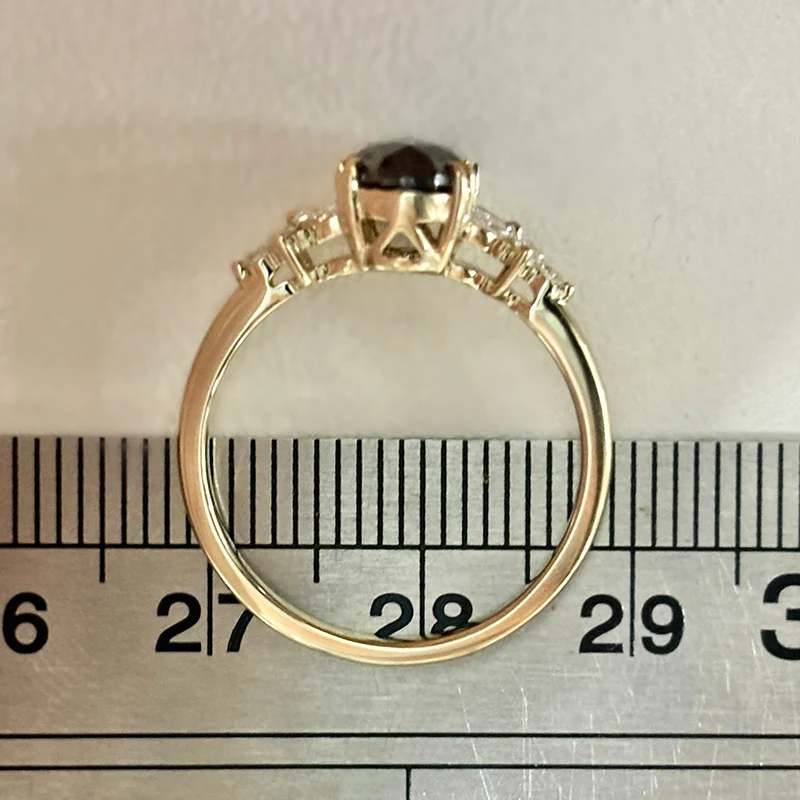
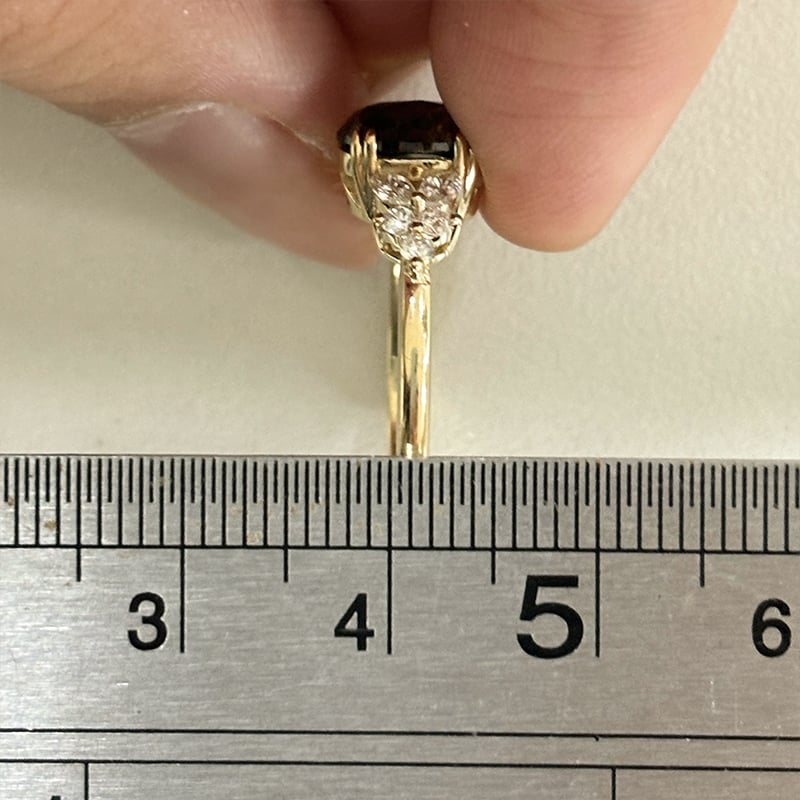
Measure the inner diameter and bandwidth by placing a ruler on top of or underneath the ring to get an accurate reading.Need help confirming your size?
Simply send us photos following the sample images below, and our team will gladly assist you in selecting the correct size.
2) Use a ring size gauge to find out the perfect size
If you’re unsure of your ring size:
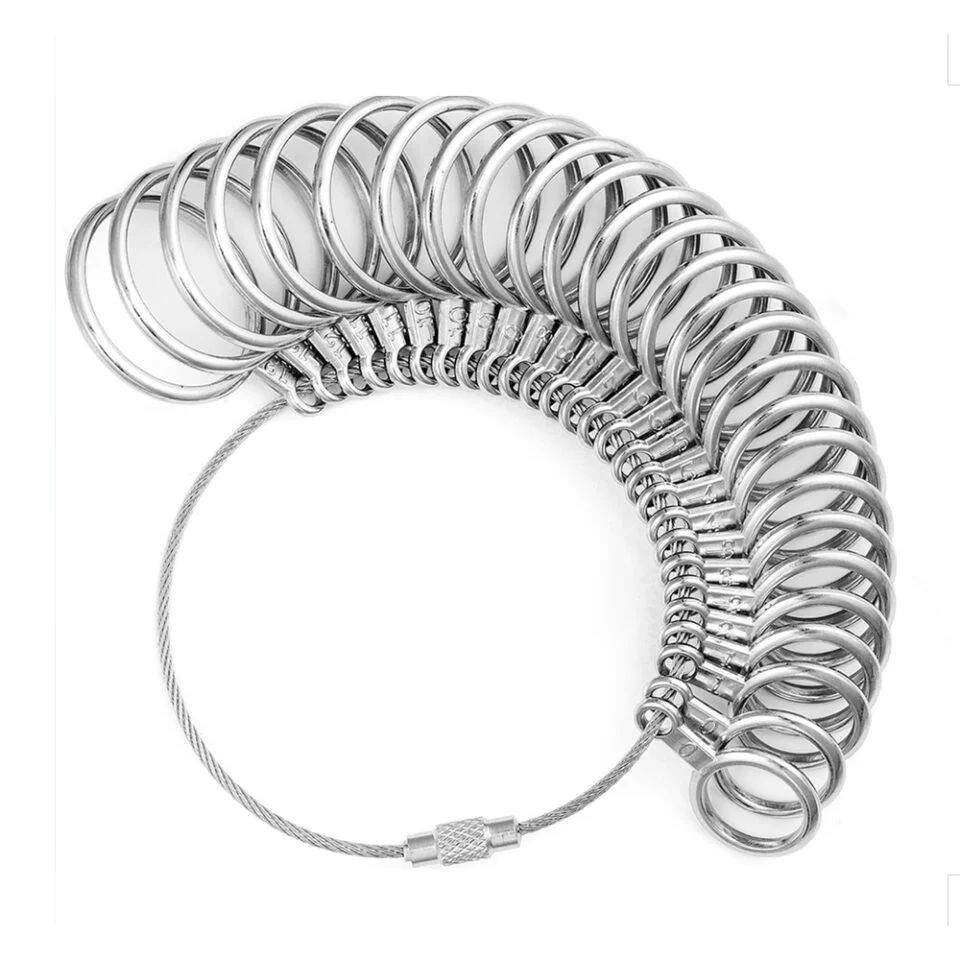
This is the most reliable method to get accurate measurements! Using a metal ring sizer best replicates the feeling of wearing a real ring, and you can easily determine your size by checking the engraved labels.
For extra assurance, you can also take a photo following Method 1 and send it to us — we’ll help confirm your exact size.
3) Use a ring sizer for the measurement
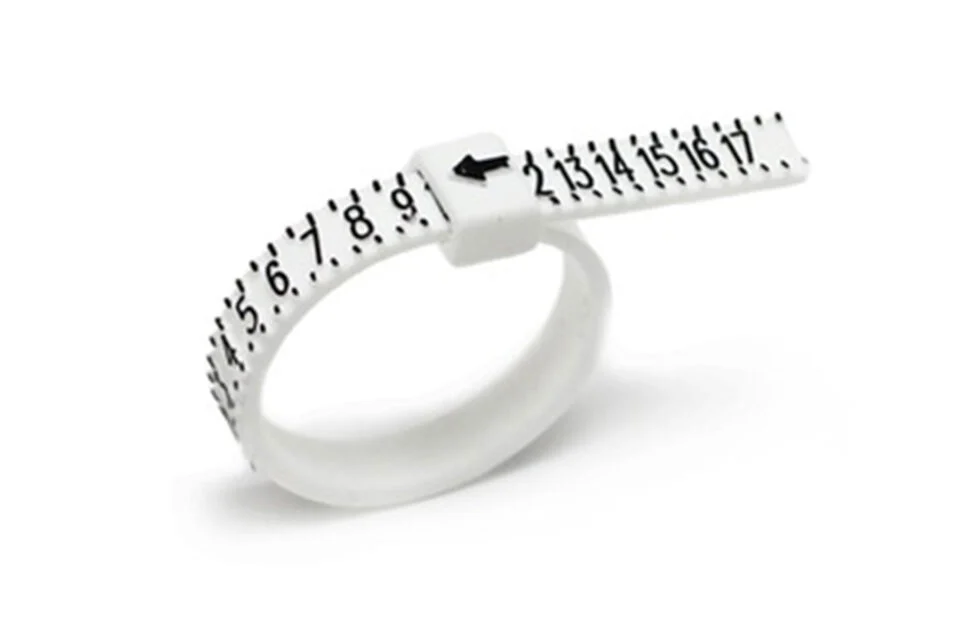
- Please don’t wrap it too tightly or too loosely. Make sure the ring or sizer can rotate smoothly on your finger without leaving any gaps.
Sending us a photo of it on your finger will also help us accurately assess your size.
4) Get Sized at Your Local Jeweler
It’s always a good idea to get sized at a nearby jeweler! However, be sure to ask about the bandwidth they use for measurement. As mentioned earlier, narrow bands tend to feel slightly larger in the same size, while wider bands fit more snugly. The reason is simple — the more metal covering your finger, the tighter the ring will feel.
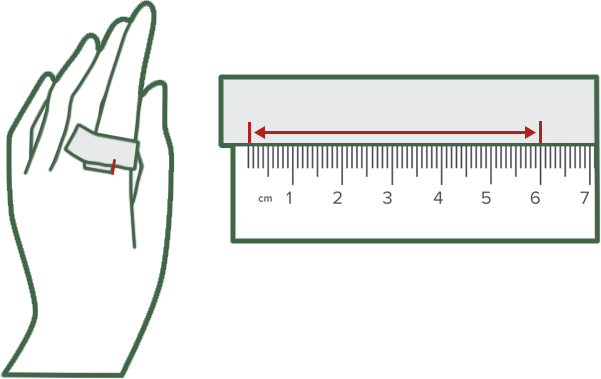
5) Measure the Circumference of Your Finger
Unlike metal or plastic ring sizers, paper strips and threads are thicker and more flexible. This can cause slight bulging or looseness when wrapped around the finger, often resulting in a measurement that’s slightly larger than your true size.
While this method is simple and convenient, it should be used as a secondary reference, as it may not offer the same level of accuracy as professional ring sizing tools.
Notice:
To minimize errors, please measure several times and take the average result. Additionally, if you are using this method, please let us know your or the wearer’s height and weight as a reference to help us provide more accurate guidance.
*Wrap a strip of paper, a piece of string, or a soft measuring tape around your finger and mark where it overlaps. Then, straighten it out and measure the length from the starting point to the mark.
Please send us a clear photo of the measuring strip or string so we can help confirm the correct size.
In Conclusion
If you are measuring your ring size at home, sending us clear photos of your measuring process is a very important step—it helps us ensure accuracy and provide the best recommendation for your perfect fit.
If you need any assistance, please feel free to contact us at service@arfinejewelry.com
4. Sizing & Design Tips
For ring sizes smaller than US 4:
Rings with smaller circumferences have a tighter curvature, which can put extra stress on side settings and make side stones more prone to loosening over time.
→ We recommend choosing designs with fewer or smaller side stones to ensure long-lasting durability and comfort.For ring sizes larger than US 9:
Larger rings naturally experience greater structural stress, as the metal band spans a wider circle and endures more bending during daily wear.
→ To maintain proper strength and balance, we suggest choosing band thickness of at least 1.6 mm. If the product page lists a thinner band, feel free to contact us for a custom adjustment.
RING SIZE CHART